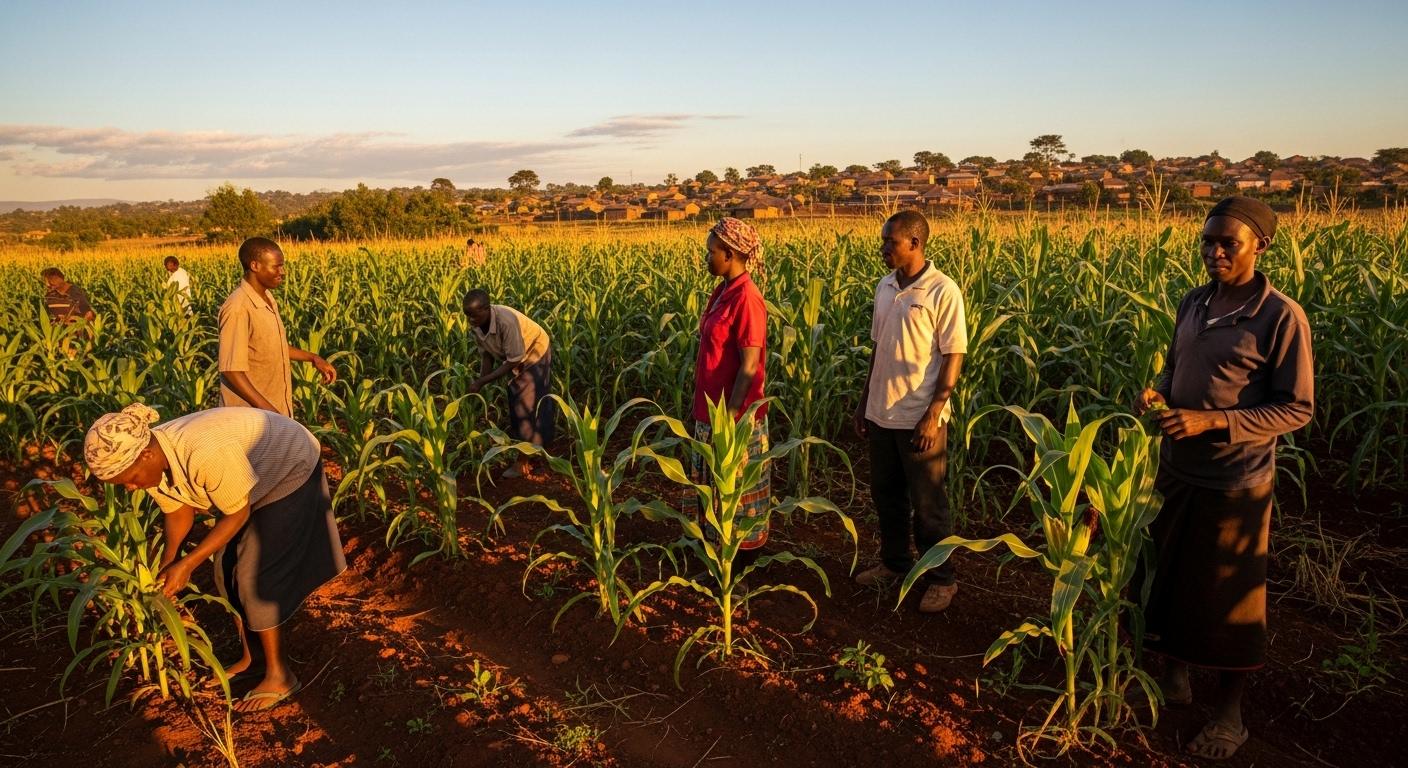
Smallholder farmers, those with often less than 2 hectares, dominate food production in developing countries. Farms under 5 ha in Asia, Africa and Latin America account for over half of global output of staples like maize, rice, millet and wheat. Small farms also tend to use more labor and devote most land to food crops, making them highly productive per hectare. As Zero Carbon Analytics summarizes: “Farms of less than five hectares in developing countries account for more than half of global production of nine staple crops” including maize, rice and sorghum. Embedding these farmers in modern value chains is therefore critical for food security and rural incomes.
Market Access Barriers
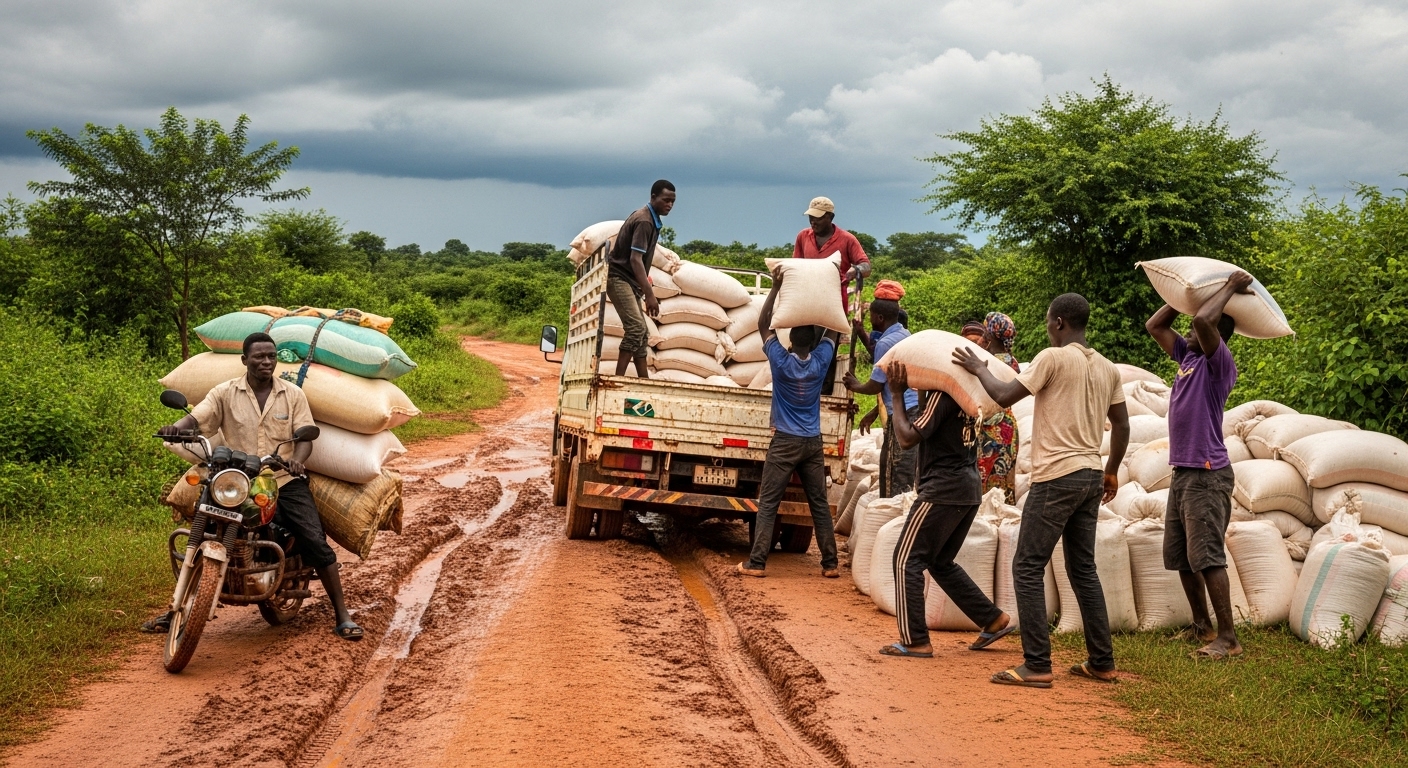
Despite their importance, smallholders face steep barriers to market access. Poor infrastructure is a chronic problem: farmers are often distant from roads, markets and storage facilities, so high transport costs and post-harvest losses erode their profits. For example, remote smallholders in Africa pay steep prices to move goods, and much of their crop may spoil before reaching town markets. Price volatility is also extreme in staple markets: maize prices in Kenya, for instance, swing by 150–300% between harvest and lean season, encouraging early (and under-dried) sales. Moreover, domestic grain markets often do not reward quality, farmers in Tanzania receive the same price for high- and low-quality maize, since traders mix crops. Quality standards and export regulations can further exclude smallholders: meeting strict sanitary or grading requirements for export markets is costly and technically demanding. Financial barriers also loom: most smallholders lack collateral, credit history or buyer guarantees, forcing them to rely on expensive intermediaries and informal loans. In short, policy experts note that “market access” for smallholders means both accessing input and output markets; without it, “high input prices, low output prices, and inefficient intermediary markets” discourage investment on-farm.
Aggregation and Inclusion Models
To overcome these barriers, effective aggregation and inclusive value-chain models have emerged. Farmer organizations and cooperatives allow smallholders to pool volumes, lowering transport costs and improving bargaining. For example, companies often work with farmer unions or cooperatives to aggregate thousands of growers. Heineken’s Ethiopia barley project relied on cooperatives and unions to collect and finance inputs, helping double yields across 40,000 farmers. Similarly, Ghana’s “Masara N’arziki” grain initiative (a public–private partnership involving Yara, Wienco and others) mobilized hundreds of maize producers, introducing better agronomy and group marketing to boost productivity. Cooperatives also enable credit and insurance: by grouping, farmers can obtain warehouse receipts and crop-loan programs that individual farms cannot.
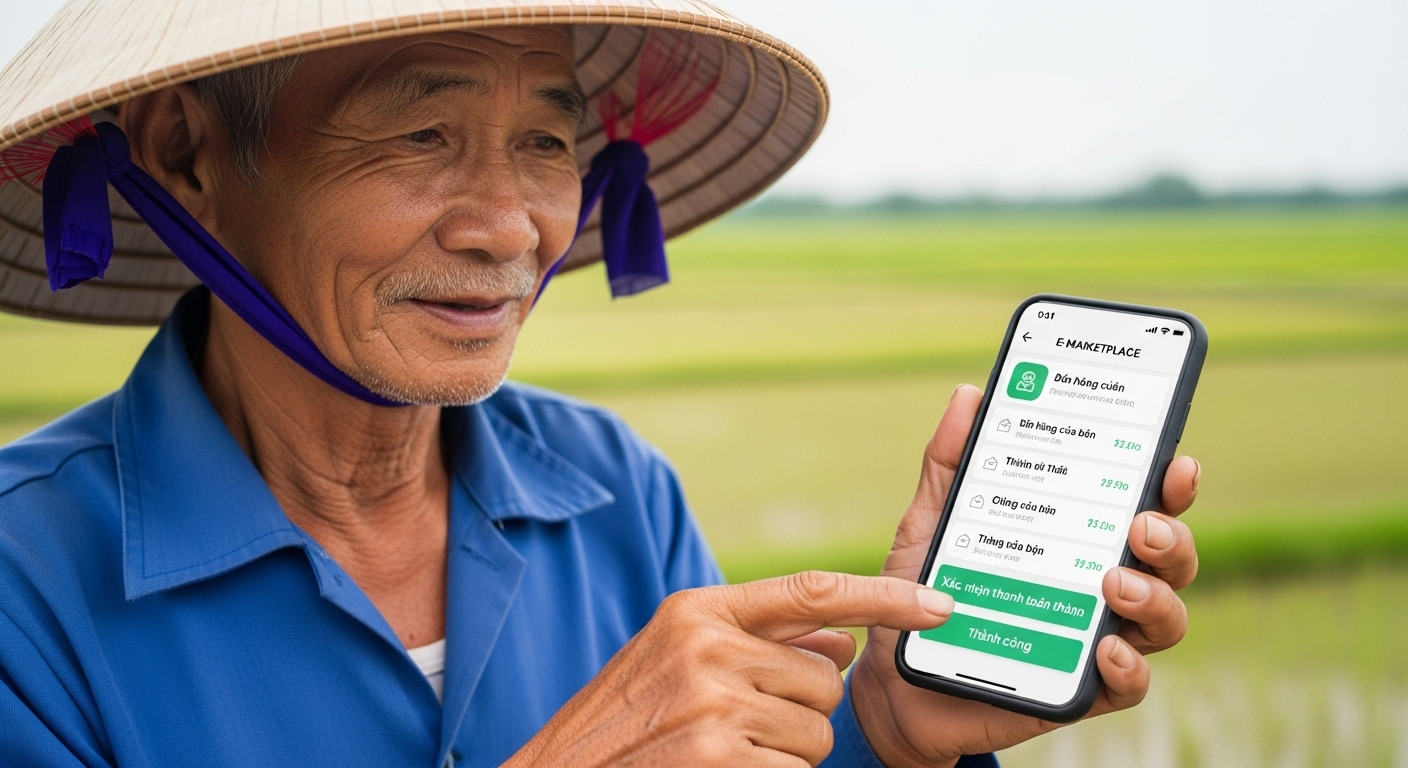
Digital market platforms are another emerging aggregator model. Mobile apps and e-marketplaces link dispersed producers to buyers and services. In Tanzania, the UNCDF-supported Digital Mobile Africa (DMA) platform enrolled some 6,700 smallholder maize farmers, enabling bulk purchase of inputs (at wholesale prices) and mobile banking for farm loans. By aggregating orders across villages, DMA users access lower input costs and formal financing they could not individually obtain. In Southeast Asia, Vietnamese agritech Techcoop raised $70 m to build a “digitized, export-oriented supply chain” for rice and other staples. It now plans to serve 50,000 farm cooperatives and over 10 million smallholders by directly connecting them to global buyers, while offering flexible payment terms, traceability and finance. Likewise, African platforms like South Africa’s Khula! (funded by PepsiCo’s KDF) connect small farms to input suppliers and off-takers via phone apps, cutting out middlemen.
Private agribusiness aggregators also play a key role. Some companies adopt a “village-level sourcing” model: they place agents or buying stations near clusters of farms. Acumen- (and AGRA-) backed firms do this in East Africa, stationing local buyers to collect maize or other crops from farmers, thus reducing rural transport burdens. For example, Uganda’s Gulu Agricultural Development Company employs 190 cash-carrying agents to buy cotton (and can similarly buy grain), directly reaching scattered smallholders. Other private firms offer contract-farming schemes: they provide seeds, fertilizers and technical advice on credit, then guarantee purchase at harvest. Such partnerships have been forged in various countries (e.g. cereal farming in Kenya and West Africa) to secure supply for exporters and processors. Joint ventures, like Nando’s peri-peri chili in Southern Africa, may even give farmers equity or profit shares, aligning incentives.
Contract Farming, Price and Risk Sharing
Contract farming is widely used to integrate grain producers. By signing agreements before planting, farmers get a pre-sold market, stabilized prices and often inputs or credit. Under typical contracts, a buyer (mill or brewery) may advance a portion of payment and supply inputs, while the farmer agrees to deliver a set quantity at harvest. Experiments show such arrangements boost investment: households under secure contracts invest more in fertilizers and achieve higher yields. Contracts also serve as de facto insurance: by guaranteeing a buyer, they protect farmers from price swings. Some schemes incorporate price-setting mechanisms like floor prices or revenue-sharing: for example, a cooperative might set a minimum price in advance, or the contract may fix a base price plus a market-linked premium. Other models blend risks: group-based contracts allow farmer associations to share weather or price risks collectively. Likewise, private buyers sometimes offer index-insurance or asset loans (equipment, storage) repayable in crop, further cushioning farmers.
However, experts caution that contract terms must be fair and transparent. If traders can impose prices or if crop quality reduces after harvest, farmers may not reap benefits. Strong governance (e.g. involving farmer cooperatives in setting terms) is crucial. Notably, in Ghana and Tanzania, brewery-driven sorghum outgrower schemes tried to substitute imports, but lacked sustainability when farmers remained “inadequately involved in price-setting” or couldn’t sell surplus beyond the contract. In well-functioning models, though, risk-sharing mechanisms (like joint loans, insurance, or fixed-price clauses) help stabilize farmer income and encourage adoption of better inputs.
Quality Standards and Grading
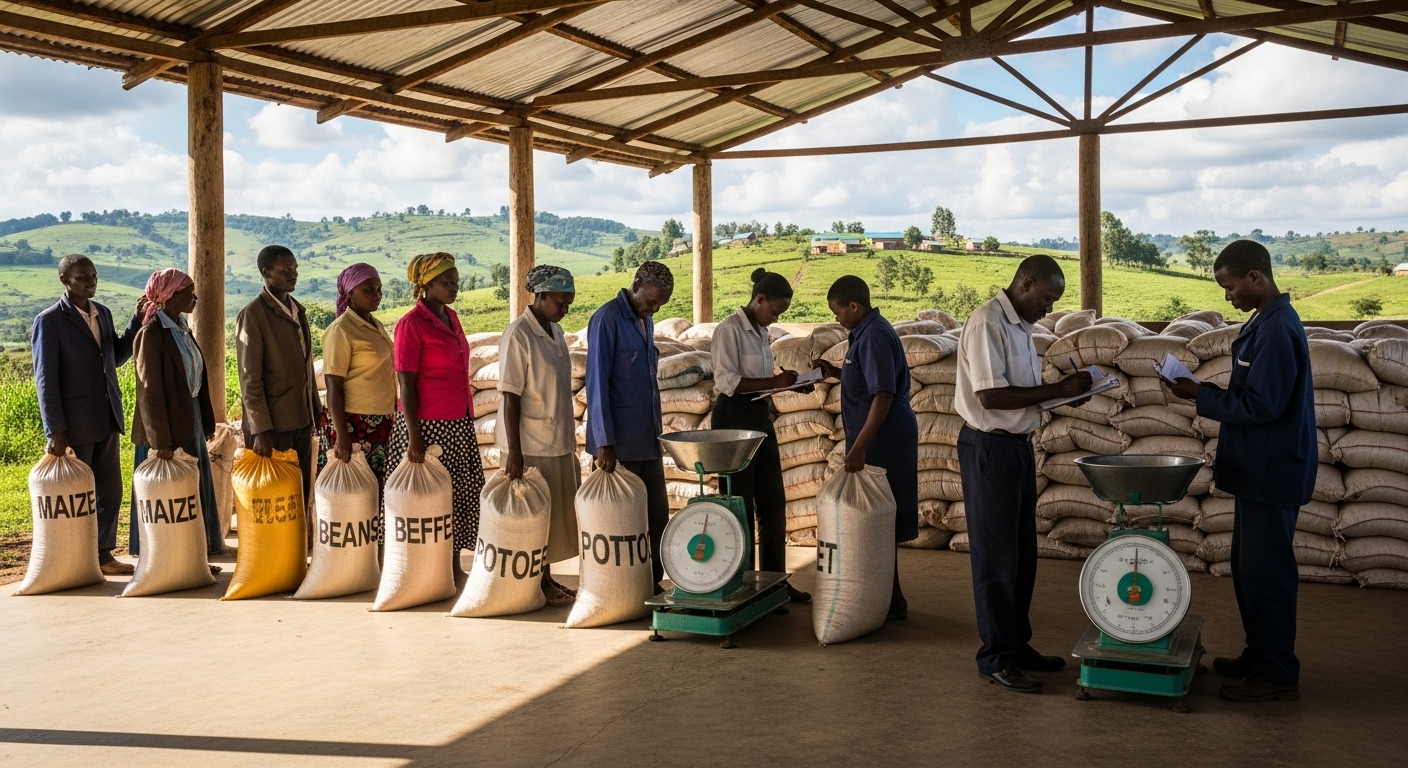
Meeting quality and safety standards is vital for market integration. Modern value chains (especially exports) impose strict criteria for grain moisture, purity, and contaminants (e.g. aflatoxin limits). For smallholders, this is a double-edged sword: compliance can unlock higher-value markets, but is hard without training and infrastructure. In many local markets, no grading system exists so farmers gain no premium for better grain. As one analysis notes, African cereals markets rarely reward quality: “In rural Tanzania, farmers with high-quality maize are paid the same price as a farmer who produces low-quality maize…Farmers have little incentive to do better.”. The first buyers to demand quality tend to be institutional: the UN World Food Programme and major millers or breweries often insist on certified standards.
For export access, compliance with international standards (ISO, EU or regional protocols) is mandatory. Successful programs typically include graded procurement, drying facilities and certification services. For example, some maize cooperatives in East Africa now invest in moisture meters and simple cleaning lines so their maize grades meet commercial milling specifications. Digital traceability (as Techcoop employs) can also assure buyers of origin and quality. Policymakers and private sectors alike are encouraged to support grading systems and farmer training on quality. The UNCTAD has warned that “stringent standards – both public and private – make it increasingly difficult for smallholders to access markets”, highlighting the need for flexible, supportive approaches (e.g. phased compliance, group certifications, or technical assistance) rather than barring entry outright.
Case Studies and Impacts
Several recent initiatives show measurable gains from integration. In Ethiopia, Heineken partnered with local firms to build a malt barley supply chain. It provided training, inputs and guaranteed markets to over 40,000 smallholders. The result: farm yields roughly doubled, yielding an estimated USD 59 million in extra farmer revenues. In Southern Africa, Nando’s established a peri-peri chili network; after ten years about 724 smallholder farmers are supplying 100% of its demand. These farmers now earn roughly USD 955 per year on average – far above incomes from alternative crops. This shows how integrating even a niche crop with quality requirements can boost farm income.
In Vietnam, the agritech startup Techcoop is digitizing rice and grain procurement. With $70m funding, it connects tens of thousands of farmer groups to exporters and offers finance and traceability. Techcoop’s goal is to link over 10 million smallholders directly to global markets. In Tanzania, the DMA digital platform (UNCDF-supported) has already registered nearly 6,700 maize farmers, enabling them to purchase inputs collectively and obtain loans against future harvests. Though long-term data on incomes is pending, participants report lower input costs and faster payments.
In other regions, projects are ongoing. For instance, partnerships in India and Bangladesh are piloting contract millet and rice schemes where buyers guarantee prices and supply certified seeds, leading early adopters to increase yields by 15–30% (source: AgTech Alliance reports, 2023). In Latin America, small maize and sorghum clusters (e.g. Mexico’s Specialty Grains Program) are exploring fair-trade branding, though published impact data is limited. Overall, the evidence suggests that when smallholders have secured buyers, finance and technical support through well-managed value-chain programs, their incomes and productivity rise significantly.
Recommendations
To scale effective integration, agribusinesses, cooperatives and governments should collaborate on infrastructure, finance and support:
Invest in infrastructure
Better rural roads, storage (warehouses/drying), and market facilities reduce post-harvest loss and connect farmers to demand centers. Public investments in roads have been shown to raise farmer incomes and diversify crops.
Strengthen cooperatives and associations
Organizing farmers into cooperatives or clusters increases volume and bargaining power. Governments and NGOs can provide training on management, accounting and quality control. Cooperatives should be enabled to access credit (via group guarantees) and certification services.
Promote digital aggregators
Public–private partnerships can fund digital platforms (mobile apps, e-procurement) that aggregate smallholder orders and sales. This improves transparency and market information. Example: scaling up apps like DMA (Tanzania) and Khula (South Africa) can link millions more farmers to markets.
Support inclusive contract farming
Encourage agribusinesses to offer fair, transparent contracts (with price floors or insurance clauses) and to share risks. Model contracts should involve farmer input and offer training on good practices. Governments can facilitate by guaranteeing payment systems or subsidizing certifications.
Implement quality and grading systems
Develop local grading standards for grains and support extension to meet them. Public labs or certified laboratories can help smallholders test moisture and contaminants. Export-oriented value chains should assist farmers to reach export quality (through training or subsidies for equipment).
Enable finance and insurance
Expand rural finance tailored to smallholders (warehouse receipt loans, input credit). Introduce crop or weather insurance linked to contracted areas. Bundling credit with contracts (as Heineken did) helps farmers invest in yield-boosting inputs safely.
Engage smallholders in policy
Include farmer representatives in policy dialogues on trade, standards and land. Policies should level the playing field (avoiding undue subsidies to large farms) and actively support smallholder involvement in value-chain programs.
By addressing these areas, stakeholders can help transform small-grain farming from subsistence into a viable business. Integrated value chains that combine aggregation, secure markets, and quality assurance not only raise farmer incomes and productivity but also stabilize national food supplies. Recent examples from Africa and Asia illustrate that with the right combination of training, technology and market linkages, smallholder grain farmers can become competitive suppliers to modern agriculture sectors benefitting both local economies and global food security.
By Kosona Chriv
Bibliography
Recent research and case studies as cited above, including policy briefs and program evaluations, provide the evidence and examples informing these findings
https://zerocarbon-analytics.org/nature/smallholder-farmers-agricultural-sustainability-and-food-security/#:~:text=hectares%20in%20size%20produce%20almost,7%20million%20smallholder
https://www.brookings.edu/articles/how-companies-integrate-smallholder-farmers-in-their-value-chains-in-africa/#:~:text=Heineken%2C%20a%20Dutch%20brewery%2C%20has,2
https://www.uncdf.org/article/5934/uncdf-partners-with-a-digital-platform-to-link-farmers-to-financial-and-agricultural-products-and-services-in-tanzania#:~:text=DMA%E2%80%99s%20online%20platform%20helps%20registered,services%20while%20mitigating%20their%20risk
https://agfundernews.com/how-techcoop-plans-to-build-an-export-oriented-supply-chain-for-southeast-asias-smallholder-farmers#:~:text=With%20the%20funding%2C%20Techcoop%20will,and%20promoting%20sustainable%20agricultural%20practices
https://www.povertyactionlab.org/policy-insight/increasing-small-scale-farmers-access-agricultural-markets#:~:text=Contract%20farming%20is%20a%20common,experimental%20studies%20%2069
Smallholder farmers, agricultural sustainability and global food security - Zero Carbon Analytics
https://zerocarbon-analytics.org/nature/smallholder-farmers-agricultural-sustainability-and-food-security/
The Real Hunger Crisis: It’s About Access, Not Abundance
https://www.globalcitizen.org/en/content/hunger-crisis-smallholder-farmers-market-access/
Increasing small-scale farmers’ access to agricultural markets | The Abdul Latif Jameel Poverty Action Lab
https://www.povertyactionlab.org/policy-insight/increasing-small-scale-farmers-access-agricultural-markets
Improving African Grain Markets for Smallholder Farmers
https://agra.org/wp-content/uploads/2020/07/Grain-Markets-Report-7-26-20.pdf
Policy, not technical challenges, is the real hurdle for smallholder farmers, says Civil Society | UN Trade and Development (UNCTAD)
https://unctad.org/news/policy-not-technical-challenges-real-hurdle-smallholder-farmers-says-civil-society
How companies integrate smallholder farmers in their value chains in Africa | Brookings
https://www.brookings.edu/articles/how-companies-integrate-smallholder-farmers-in-their-value-chains-in-africa/
Review of smallholder linkages for inclusive agribusiness development
https://www.fao.org/4/i3404e/i3404e.pdf
UNCDF Partners with a Digital Platform to Link Farmers to Financial and Agricultural Products and Services in Tanzania - UN Capital Development Fund (UNCDF)
https://www.uncdf.org/article/5934/uncdf-partners-with-a-digital-platform-to-link-farmers-to-financial-and-agricultural-products-and-services-in-tanzania
Behind Techcoop's 'export-oriented supply chain' for smallholders
https://agfundernews.com/how-techcoop-plans-to-build-an-export-oriented-supply-chain-for-southeast-asias-smallholder-farmers
An Agribusiness Model Built on Village-Level Sourcing - Acumen
https://acumen.org/blog/how-village-level-sourcing-models-help-agribusinesses-get-to-scale/